


Building Emotional Resilience
Part 31, in the Understanding Your Child's Emotions series
Building Emotional Resilience One Conversation at a Time
A child bursts into tears because something feels unfair. Another struggles with rejection after being left out of a game. A third becomes overwhelmed by frustration when something doesn't go to plan.
By now, one thing should be clear: Children do not simply need to learn about emotions. They need opportunities to experience them, understand them, make sense of them and recover from them. That process happens gradually. And more often than not, it happens through conversation. Not necessarily long conversations, nor perfect ones, just thousands of ordinary moments spread across childhood.
Looking Back at the Journey
Over the series we have explored:
Through these articles we explored the science of emotion, the body budget, emotional development, behaviour, emotional needs, emotional literacy, fairness, frustration, comparison, belonging, rejection, jealousy, perspective-taking, Theory of Mind, empathy, resilience, autism and ADHD.
Although the topics were varied, a common theme emerged: Children's emotions make sense when we understand the child, the situation, and the world from their perspective.
Children's reactions may not always seem rational from an adult perspective, but they are usually understandable when viewed within the child's developmental stage, experiences and circumstances.
Emotions Are Information
One of the most important ideas explored throughout the series is that emotions are not simply problems to be solved - they are sources of information. This does not mean emotions are always accurate.
As we discovered when discussing appraisal, attribution and perspective-taking, emotions are influenced by interpretation as well as events. However, emotions usually tell us that something feels significant. Ignoring them rarely helps us understand them.
Behaviour Is Not the Whole Story
Many adults spend much of their time responding to behaviour. The challenge is that behaviour is often the final chapter rather than the beginning of the story. Throughout the series we repeatedly returned to the idea that behaviour can communicate emotions, needs, worries, misunderstandings, frustrations, and sensory overload. Looking beneath behaviour often reveals a richer and more useful story.
Children Develop Through Relationships
No child develops emotional skills in isolation, children learn about emotions through relationships. They watch how adults respond to frustration, they notice how conflict is handled, they experience connection, repair and understanding.
Psychologists such as John Gottman have argued that emotional development is strongly influenced by how emotions are discussed and managed within relationships (Gottman, Katz, & Hooven, 1997).
Children do not simply learn about emotions, they learn from emotional experiences with other people.
Understanding Comes Before Regulation
Many adults focus on helping children regulate emotions. Whilst that is important, children often need understanding before regulation. A child who feels misunderstood may struggle to calm down, whereas a child who feels heard may become more open to problem-solving. This was the underlying principle behind ‘connection before correction.’
It is difficult to learn when feeling threatened, overwhelmed or disconnected. Understanding creates the conditions in which learning becomes possible.
Resilience Is Not Avoiding Difficult Emotions
One of the biggest myths about emotional wellbeing is that resilient people experience fewer difficult emotions. The evidence suggests otherwise. Resilient people experience disappointment, frustration, anxiety, sadness and uncertainty, just like everyone else. The difference is that they gradually learn "I can cope with this."
Psychologist Ann Masten described resilience as "ordinary magic" because it develops through ordinary experiences, relationships and opportunities to overcome challenges (Masten, 2001). Children do not become resilient because life is easy, they become resilient because they discover they can manage difficulties.
Not Every Child Experiences Emotions in the Same Way
The articles on autism and ADHD highlighted the important point that emotional development is not identical for every child. Children differ in temperament, sensitivity, communication, attention, sensory processing and social understanding. There is no single pathway through emotional development.
Understanding children means recognising both shared human experiences and individual differences. The goal is not to make every child respond in the same way, the goal is to understand how each child experiences the world.
Small Conversations Matter
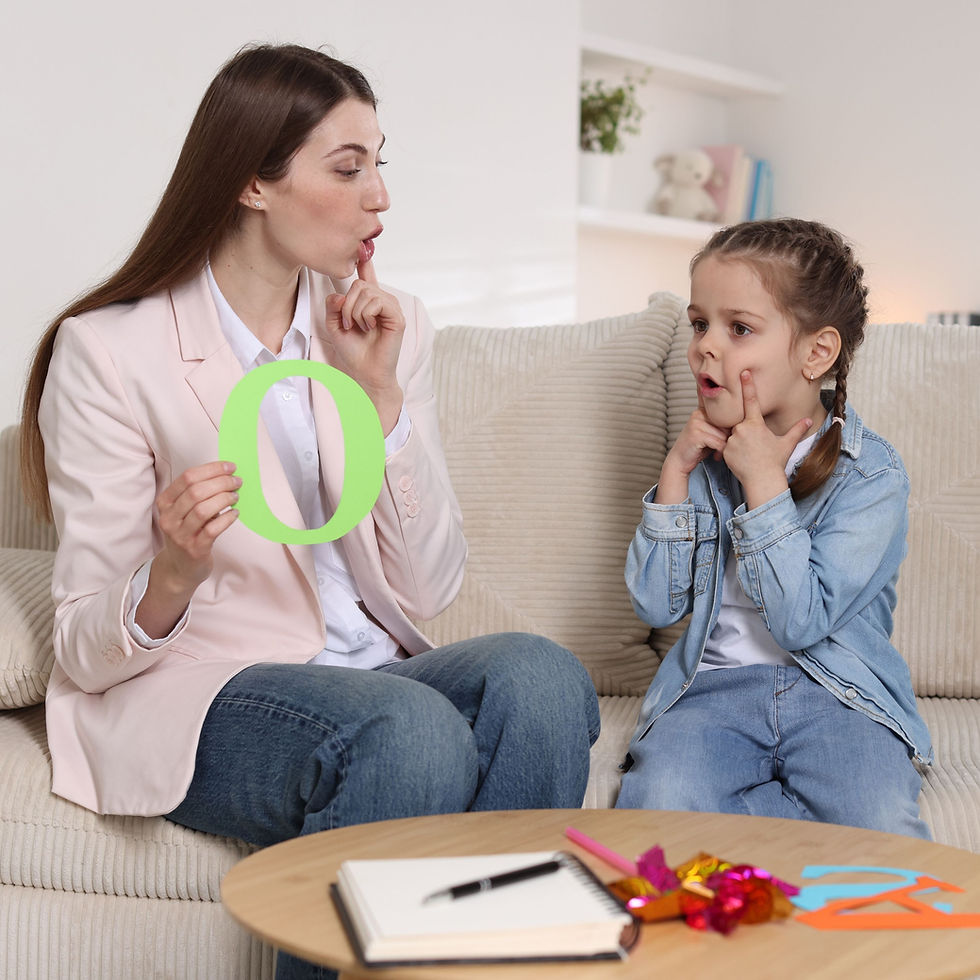
When people think about emotional development, they often imagine major discussions. Sometimes those matter but more often, emotional development occurs through smaller moments. Moments such as:
"You look disappointed."
"That seems frustrating."
"What do you think happened?"
"How do you think they felt?"
"What might help now?"
These conversations may seem ordinary, yet over time they help children:
build emotional vocabulary,
reflect on experiences,
understand other people,
develop self-awareness,
learn resilience.
Each conversation becomes part of a much larger process.
There Is No Perfect Parent
A reassuring conclusion to draw from both research and experience is this: Children do not need perfect adults. People lose their patience, misunderstand situations, say the wrong thing, and make mistakes. The important question is not: "Was I perfect?" The more useful question is: "Can the relationship be repaired?"
Children often learn more from repair than they do from getting things right the first time.
What Does This Mean for Adults?
Perhaps the biggest lesson from this series is that emotional development is not about finding the perfect response, it’s about remaining curious.
Curious about emotions, behaviour, relationships, perspectives, and experiences.
When adults approach children with curiosity rather than certainty, understanding tends to grow. And understanding often changes everything.
Try This
The next time a child experiences a strong emotion, pause before solving the problem.
Instead ask yourself:
"What might this experience be teaching them?"
The answer may be more valuable than the solution.
Questions for Reflection
Which ideas from this series changed your understanding most?
How can everyday conversations support emotional growth?
Key Takeaway
Children are not born understanding emotions. They learn through experience, relationships, reflection and conversation. The goal is not to eliminate difficult emotions. The goal is to help children understand them, manage them and learn from them. Emotional resilience is not built in a single moment, it develops through thousands of ordinary interactions with adults who are willing to listen, reflect and remain curious. Sometimes emotional growth begins with a simple conversation, sometimes that conversation changes far more than we realise.
References
Bandura, A. (1977). Social Learning Theory. Prentice Hall.
Barrett, L. F. (2017). How Emotions Are Made: The Secret Life of the Brain. Houghton Mifflin Harcourt.
Gottman, J., Katz, L., & Hooven, C. (1997). Meta-Emotion: How Families Communicate Emotionally. Lawrence Erlbaum Associates.
Masten, A. S. (2001). Ordinary Magic: Resilience Processes in Development. American Psychologist, 56(3), 227-238.
Wellman, H. M. (2014). Making Minds: How Theory of Mind Develops. Oxford University Press.


Comments